

Choosing the Right Disability Scooter
A disability scooter is a great option to gain independence and enjoy a wide range of outdoor and indoor activities. However, choosing the right model can be difficult.
Children will need upper body strength and hand coordination to operate the wheel. These are the same requirements as those required to operate a wheelchair.
Increased Independence
A mobility scooter for disabled people is an ideal option for those with limited mobility. They might be capable of walking for short distances, but struggle with walking longer distances or over a prolonged period of time. It is much simpler to complete things such as shopping or visiting friends without having to rely on others or give up these activities.
Mobility scooters offer a great amount of independence. It lets users move independently, without relying on others, which can boost their confidence. It also means that they don't have to wait for others to assist them with their transportation. This can cause anger and depression in people with limited mobility.
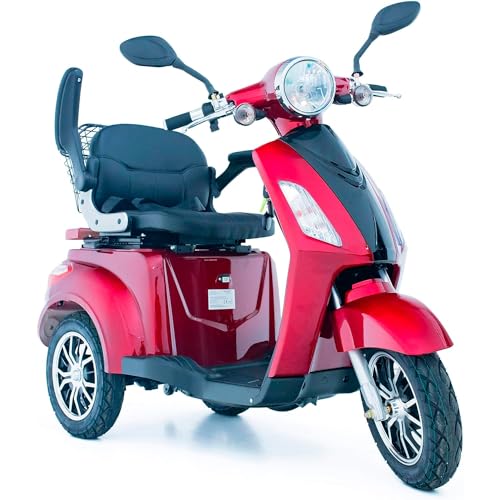
The majority of scooters are designed to give the user ease of use, with enough leg room and a comfortable seat. This is important since it lets people move about with ease and prevents them from getting tired more quickly than if they were using a wheelchair. As such, it helps them maintain their physical health, which improves their overall quality of life and their ability to continue doing the things they enjoy.
There are a variety of mobility scooters with a variety of 3-wheel and 4 wheel models. 3-wheel mobility scooters are generally more suitable for indoor use because of their maneuverability, whereas 4-wheel mobility scooters are more likely to perform better outdoors because of their stability. Consult your occupational therapist or GP for advice if you're not sure about the kind of scooter that is suitable for you.
A mobility scooter can be easily disassembled and stored in order to make it easier to transport. It can be easily transported in your vehicle or even inside the trunk if needed. This is especially useful if you're travelling for reasons of business or vacation and want to ensure that you have a mobility scooter available in case of any unexpected situations.
Reduced Physical Strain
The mobility of the mobility scooter of a disabled person means you can go to the shops, the post office and numerous other places without having to rely on friends, family or caregivers to take you. You can also remain active and involved in your community. This can help improve your physical and mental health.
You can choose from a wide range of mobility scooters that differ in terms of size as well as power, speed limit and other features. However, adult electric mobility scooter of models are relatively user-friendly and easy to operate. The basic premise is that you sit on the scooter's seat, push down on the steering levers to move forward, and pull them back to turn left or right. Some scooters have Regenerative brakes that are fitted which means that the driver does not have to constantly push the pedals to slow down or stop the vehicle.
You can ask an physiotherapist or doctor for assistance if you're not confident operating your mobility scooter. They'll have a thorough understanding of your situation and will be able to offer recommendations in accordance with what's best for you. You can also reach out to the local club of mobility scooters to learn how others manage their scooters.
Mobility scooters aren't the ideal option for long-distance travel. If you are planning to travel a great distance it is recommended to choose a model with a large battery capacity and a strong motor. This will let you travel for longer distances and tackle different terrains, without worrying about running out or overheating.
Mobility scooters are a great way to improve your life, however it's crucial to know their impact on your health. Zagol and Krasuski (2009) studied the medical data of soldiers prior to and after they adopted mobility scooters. The results showed that the cardiovascular risk factors like blood sugar levels and haemoglobin ALC had decreased.
In addition, they saw an improvement in their perceived happiness and mental well-being. This is in contrast to other studies that suggest that increased comfort from mobility scooters could result in sedentary and non-active lifestyles.
Increased Social Participation
Mobility scooters are a fantastic confidence booster as they give you more independence and freedom. It allows people to do errands or attend social gatherings without assistance, improving their self-esteem and overall level of living. Mobility scooters also permit users to go on longer trips to places that they would previously have been unable to reach, allowing them to experience a new sense of adventure as well as a greater sense of wellbeing.
Individuals who suffer from restricted walking capabilities are often unable to run errands or participate in social activities without outside assistance, which can have negative effects on their self-image as well as their sense of wellbeing. When a person is able to take part in their everyday activities without the need of anyone else to push them, they will gain confidence and improve their social skills.
There is a dearth of information on the advantages of mobility scooters, what is available does point to the fact that people report an improvement in their quality of life. Mobility scooters allow users to be more independent, and to connect with family and friends.
Mobility scooters can have a positive impact on caregivers as well. They can help ease the physical strain of helping the elderly to perform daily tasks and move about their homes and communities. This could positively impact caregivers' mental and physical health which allows them to dedicate more time towards their health and wellbeing.
Because of improved design and image as well as improved accessibility and less stigma associated with using mobility scooters, they are now more frequently seen on the streets. These mobility aids are also available for hire at large stores, shopping centres and visitor attractions. Shopmobility is one example. It lends scooters to those who don't own one. There has been a great deal of research on the prevalence of mobility aids and their effects on physical function and physical capabilities of users, as well as their mental health.
Mental Health Benefits
One may feel depressed and apathetic as mobility issues become more severe. Scooters can boost a person's self-confidence and emotional wellbeing by allowing them to travel independently. This can have a hugely positive effect on an individual's living quality and also relieve some of the burden placed on caregivers.
In addition to assisting with routine tasks, scooters also help with social interaction and enable people to visit friends, family local events, and visit new areas more quickly than possible without scooters. For some people mobility issues can lead them to stop participating in social activities and this can have a negative effect on mental health. Mobility scooters allow people to continue socialising and participating in community events.
Mobility scooters are known for being easy to use and navigate, and as a result many people with disabilities and seniors who require aids can be comfortable using them. The ease of operation will reduce the risk of injury or damage, and permit the machine to be used in various conditions. When selecting a mobility scooter, it is important to take into account the condition of footpaths and roads and hills. Also, take into consideration the range of the battery and the speed control. A mobility scooter suitable for these kinds of terrain must be able to drive over them and have a rear-view mirror so the driver can see behind him or her while driving.
Mobility scooters are often seen in the streets. But, little is known about their users and the way they use them. It is probable that they have a positive impact on their users' physical performance and capabilities, but it could be the situation that a lifestyle of sedentary could lead to functional decline (Brandt et al, 2004; May et al, 2010).
A mobility scooter is an ideal piece of assistive technology for people over the age of 65 who are experiencing difficulty walking. It helps to maintain their ability to move, which is essential to keep joints and muscles in good shape and preventing stiffness. It also lets them be social with their family and friends, attend local events and join groups and clubs which all help to keep a positive attitude towards life. It can also have an impact on their mental health.